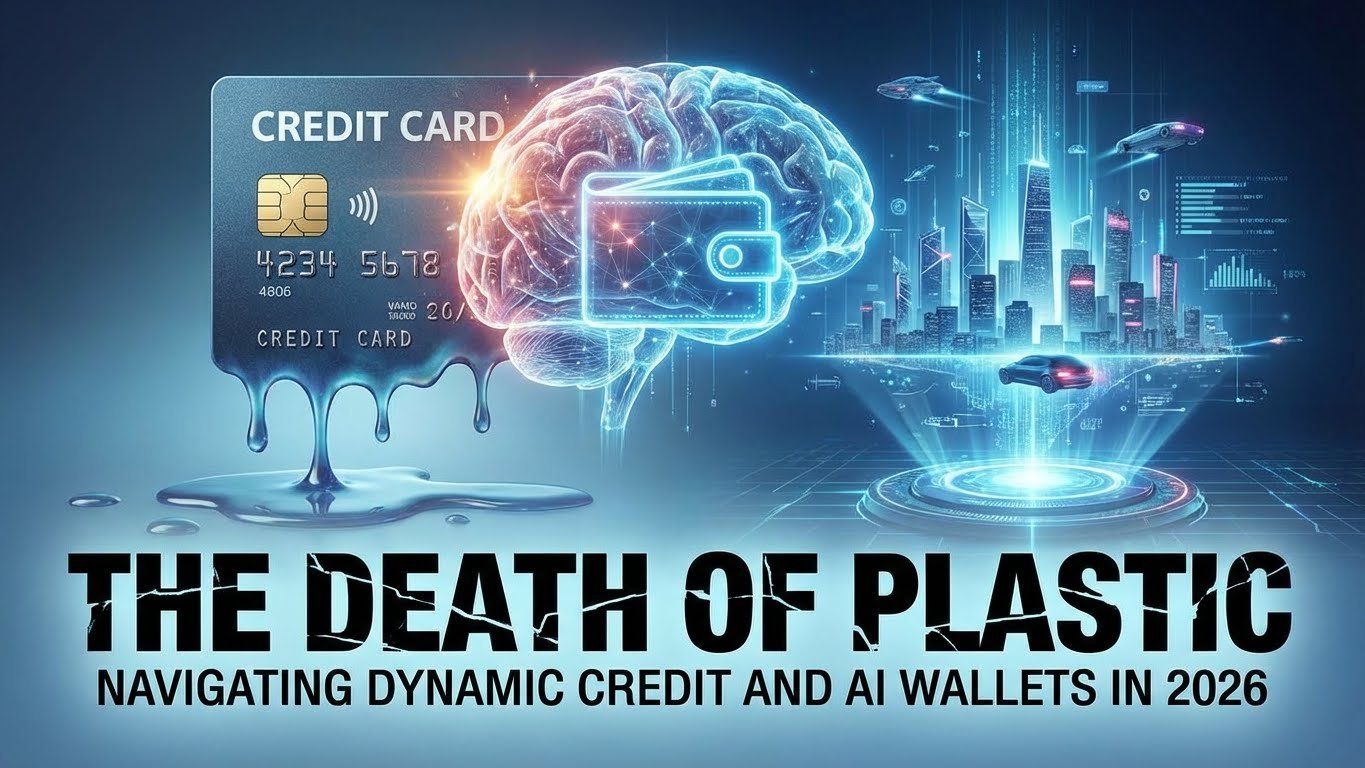
For decades, money lived in your pocket.
Cash in one section.
Plastic cards in another.
Receipts folded and forgotten.
Your wallet was physical, bulky, and predictable.
But by 2026, that wallet has quietly disappeared.
Not overnight.
Not with announcements.
But through habit.
You stopped reaching for plastic.
You stopped thinking about cards.
You stopped worrying about limits and due dates the same way.
Money started moving on its own—smarter, faster, and with far less friction.
This is the real story behind the end of plastic and how smart money moves in 2026. Not futuristic hype. Not tech jargon. Just how everyday personal finance actually works now—and how to make sure it works for you.
Plastic Didn’t Fail — It Became Obsolete
Plastic cards didn’t die because they were bad.
They died because the world changed.
Plastic was designed for a time when:
- Payments were slow
- Credit decisions were manual
- Fraud detection was reactive
- Rewards were generic
- Financial data was limited
None of that is true anymore.
In 2026, money moves at the speed of data. Plastic simply can’t keep up.
What “The End of Plastic” Really Means
Let’s be clear.
The end of plastic does not mean:
- Credit cards vanished
- Banks disappeared
- Payments became risky
It means:
- Physical cards are no longer central
- Intelligence replaced plastic
- Decisions moved from humans to systems
Your “card” still exists—but it lives in software, not your pocket.
The Rise of Smart Money
Smart money is not about being rich.
It’s about money that:
- Understands context
- Responds in real time
- Adapts to behavior
- Minimizes cost
- Maximizes value
In 2026, smart money moves automatically—guided by AI, real-time credit systems, and intelligent wallets.
What Is a Smart Wallet in 2026?
A smart wallet is not just a payment app.
It is a financial control center that connects:
- Bank accounts
- Credit lines
- Reward systems
- Installment options
- Subscriptions
- Risk controls
Instead of asking,
“How should I pay?”
The wallet answers it for you.
How Money Actually Moves in 2026
Here’s what happens when you make a payment today.
Before you even confirm, your wallet evaluates:
- Your available cash
- Upcoming bills
- Credit usage
- Reward opportunities
- Merchant offers
- Risk indicators
Then it chooses:
- The best payment source
- The best credit option (if needed)
- The lowest-cost structure
- The highest reward value
You see one tap.
Behind that tap is intelligence.
Fixed Credit Limits Are a Thing of the Past
One of the biggest changes is the disappearance of fixed credit limits.
In 2026:
- Credit adjusts dynamically
- Limits expand with stability
- Exposure shrinks with risk
- Borrowing becomes contextual
This is called smart credit.
It protects people from debt traps without removing flexibility.
Why Smart Credit Is Better for Real Life
Life isn’t monthly.
Expenses don’t wait for billing cycles. Income doesn’t always arrive on the same date. Emergencies don’t care about limits.
Smart credit works because it:
- Tracks cash flow in real time
- Responds to short-term changes
- Adjusts without paperwork
- Rewards responsible behavior instantly
This is especially powerful for:
- Freelancers
- Gig workers
- Small business owners
- Families with variable expenses
Plastic vs Smart Money: A Simple Comparison
Plastic Cards
- Static limits
- Monthly statements
- Manual tracking
- Reactive fraud control
Smart Money Systems
- Dynamic credit
- Real-time insights
- Automated optimization
- Preventive security
Once you experience the second, the first feels outdated.
Rewards No Longer Depend on Cards
In the plastic era, rewards depended on:
- Which card you used
- Whether you remembered categories
- Whether you redeemed correctly
In 2026, rewards depend on behavior.
Smart wallets:
- Analyze where you spend
- Predict future spending
- Negotiate merchant incentives
- Apply rewards automatically
You don’t “earn points and hope.”
You receive value instantly.
Cashback, Points, or Nothing? The Wallet Decides
For one purchase, your wallet may:
- Use cashback
- Apply points
- Split payments
- Defer credit
- Use zero-interest options
You didn’t choose this.
The system did—based on math, not emotion.
The Disappearance of the Physical Swipe
Most payments now happen through:
- Device authentication
- Biometrics
- Tokenized credentials
- Embedded checkout systems
The swipe, tap, and insert were stepping stones.
The future is invisible.
Security Without Plastic Is Actually Stronger
Many people fear:
“No card means less security.”
The opposite is true.
Smart money systems use:
- Behavioral biometrics
- Device trust scoring
- Location consistency
- Transaction pattern analysis
- AI fraud detection
If something feels wrong, the system stops the transaction instantly.
Plastic cards usually react after fraud happens.
How Smart Money Protects You From Yourself
This part is uncomfortable—but important.
Humans:
- Overspend emotionally
- Forget due dates
- Ignore reward caps
- Make impulse purchases
Smart wallets counter this by:
- Sending spending nudges
- Predicting cash shortfalls
- Warning before risky purchases
- Suggesting better timing
This isn’t control.
It’s correction.
Are We Losing Control Over Our Money?
Only if we stop paying attention.
Smart money systems work best when:
- Users set boundaries
- Alerts stay enabled
- Decisions remain transparent
- Manual overrides exist
The system should guide—not dominate.
Privacy in a Post-Plastic World
Smart money needs data.
That’s the trade-off.
But in 2026, stronger regulations ensure:
- Consent-based data usage
- Limited data retention
- Encryption standards
- Explainable decisions
Users gain efficiency—but must remain informed.
What Happened to Banks?
Banks didn’t disappear.
They moved backstage.
Banks now:
- Provide regulated capital
- Manage risk models
- Power credit infrastructure
- Compete on pricing
Smart wallets sit on top of banks, not instead of them.
Who Benefits the Most From the End of Plastic?
- Salaried professionals
- Online shoppers
- Families managing expenses
- Travelers
- Freelancers
- First-time credit users
If you spend money, you benefit from smarter movement.
Who Should Be Cautious?
- People carrying high-interest debt
- Users who disable alerts
- Anyone ignoring spending insights
- Those uncomfortable reviewing finances
Technology amplifies habits.
Good habits win.
How to Adapt to Smart Money in 2026
You don’t need advanced knowledge.
Just awareness.
- Review wallet insights monthly
- Keep spending limits active
- Read permissions carefully
- Understand credit usage
- Don’t ignore warnings
Smart money helps—but it doesn’t replace responsibility.
The Bigger Shift: Money Becomes Invisible
The real change isn’t cards disappearing.
It’s money becoming less stressful.
- Fewer mistakes
- Fewer fees
- Better rewards
- Faster decisions
When money moves intelligently, life feels lighter.
Final Thoughts: Plastic Is Ending, But Control Is Not
Plastic cards are fading—but personal control doesn’t have to.
Smart money in 2026:
- Reduces friction
- Improves safety
- Increases value
- Adapts to real life
The key is balance.
Let systems handle complexity.
Let humans set direction.
That’s how smart money truly moves.
Frequently Asked Questions (FAQs)
1. Are physical credit cards completely gone in 2026?
No, but they are mostly backups rather than daily tools.
2. Is smart money safe?
Yes, when provided by regulated institutions with strong security.
3. Can smart wallets overspend for me?
No. You control limits, permissions, and alerts.
4. Do I still need to track spending?
Yes. Smart tools work best with human awareness.
5. Are rewards better in smart wallets?
Usually yes, because rewards are optimized automatically.
6. Is my data protected?
Reputed platforms follow strict data protection and consent laws.
7. Can beginners use smart wallets?
Yes. They often reduce beginner mistakes.
Disclaimer
This article is for educational purposes only and does not constitute financial advice. Always read official terms and consult financial professionals when necessary.